Short answer: A plain-English look at how locksmith pricing is built, why two quotes for the same job can look nothing alike, and how to tell a fair estimate from a bait-and-switch before anyone touches your locks.
A plain-English look at how locksmith pricing is built, why two quotes for the same job can look nothing alike, and how to tell a fair estimate from a bait-and-switch before anyone touches your locks.
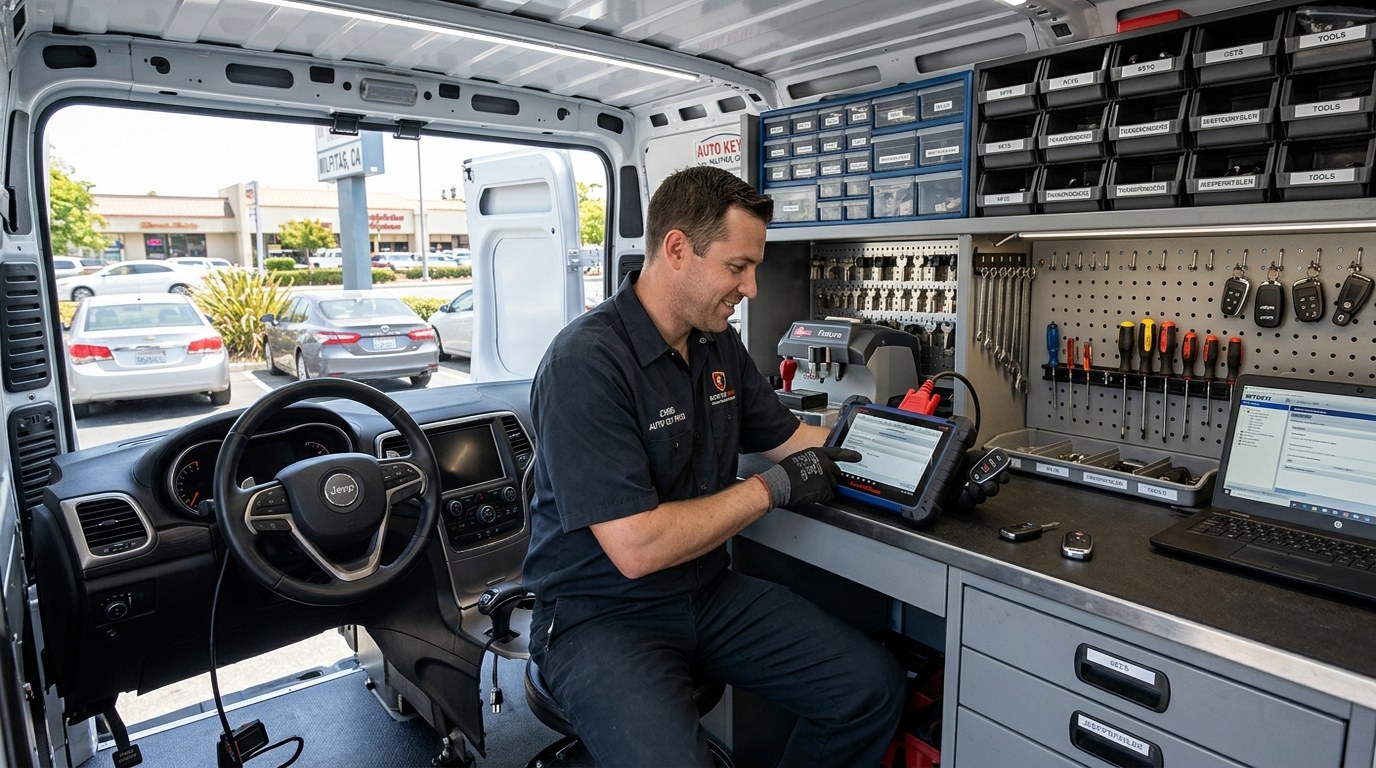
Nearly every locksmith invoice is built from the same two pieces: a service call (sometimes called a trip fee) and then the labor and parts for the actual work. The service call covers a technician getting into a van, driving to you, and arriving with a stocked toolkit ready to go; on routine daytime jobs this piece commonly falls somewhere in the range of about $15 to $50, and reputable shops will often roll it into the total rather than tacking it on as a surprise. The second piece is the work itself, which is where the numbers spread out: rekeying an existing lock is usually inexpensive per cylinder, while supplying and installing new hardware costs more because you are also paying for the lock. When you call, the single most useful question you can ask is simply, 'What is the all-in total for this, parts and labor included?' A trustworthy locksmith can give you a realistic ballpark on the phone.
Four things drive most of the variation you will see. First is timing: an after-hours, weekend, or holiday call almost always carries a premium over the same job booked for a Tuesday afternoon, because someone is being paid to drop what they are doing and come out. Second is the lock itself; a basic builder-grade knob is quick, while a high-security deadbolt with a restricted keyway, a smart lock, or a commercial mortise lock takes more skill, more time, and pricier parts. Third is the hardware you choose. If a lock has to be replaced, a bargain big-box deadbolt and a Grade-1 security deadbolt can differ by a wide margin, and that choice is genuinely yours to make. Fourth is access and logistics, such as a lock that has been damaged, a door that has dropped out of alignment, or a job that simply takes longer than expected once the technician is on site. None of these are tricks; they are the honest reasons a quote is a range and not a single fixed number.
The most common pricing trap is the too-good phone number: an ad promising a service call for something like nineteen dollars, followed on arrival by a much larger bill 'because the lock turned out to be complicated.' Protect yourself by getting the total, not just the trip fee, before you agree to anything, and by asking whether that figure could change once they see the job and, if so, why. Ask for the price to be itemized so you can see the service call, the labor, and any parts as separate lines. It is also fair to ask whether the business is local and whether the technician can identify themselves on arrival. A straightforward locksmith will welcome these questions, quote you a realistic band such as 'typically this runs about $X to $Y depending on the lock,' and stick close to it barring a genuine surprise. Vague answers, high-pressure urgency, or a refusal to give any number until they are standing at your door are all reasons to keep dialing.
Nearly every locksmith invoice is built from the same two pieces: a service call (sometimes called a trip fee) and then the labor and parts for the actual work. The service call covers a technician getting into a van, driving to you, and arriving with a stocked toolkit ready to go; on routine daytime jobs this piece commonly falls somewhere in the range of about $15 to $50, and reputable shops will often roll it into the total rather than tacking it on as a surprise. The second piece is the work itself, which is where the numbers spread out: rekeying an existing lock is usually inexpensive per cylinder, while supplying and installing new hardware costs more because you are also paying for the lock. When you call, the single most useful question you can ask is simply, 'What is the all-in total for this, parts and labor included?' A trustworthy locksmith can give you a realistic ballpark on the phone.
Four things drive most of the variation you will see. First is timing: an after-hours, weekend, or holiday call almost always carries a premium over the same job booked for a Tuesday afternoon, because someone is being paid to drop what they are doing and come out. Second is the lock itself; a basic builder-grade knob is quick, while a high-security deadbolt with a restricted keyway, a smart lock, or a commercial mortise lock takes more skill, more time, and pricier parts. Third is the hardware you choose. If a lock has to be replaced, a bargain big-box deadbolt and a Grade-1 security deadbolt can differ by a wide margin, and that choice is genuinely yours to make. Fourth is access and logistics, such as a lock that has been damaged, a door that has dropped out of alignment, or a job that simply takes longer than expected once the technician is on site. None of these are tricks; they are the honest reasons a quote is a range and not a single fixed number.
The most common pricing trap is the too-good phone number: an ad promising a service call for something like nineteen dollars, followed on arrival by a much larger bill 'because the lock turned out to be complicated.' Protect yourself by getting the total, not just the trip fee, before you agree to anything, and by asking whether that figure could change once they see the job and, if so, why. Ask for the price to be itemized so you can see the service call, the labor, and any parts as separate lines. It is also fair to ask whether the business is local and whether the technician can identify themselves on arrival. A straightforward locksmith will welcome these questions, quote you a realistic band such as 'typically this runs about $X to $Y depending on the lock,' and stick close to it barring a genuine surprise. Vague answers, high-pressure urgency, or a refusal to give any number until they are standing at your door are all reasons to keep dialing.
Call (408) 791-0007 and describe the situation, your exact location, and what you need. Timing is confirmed on that call rather than promised in advance.
Call for help: (408) 791-0007 — a straight answer and an honest estimate before any work begins.